The global football landscape has shifted dramatically. When the whistle blows for the opening match of the 2026 FIFA World Cup on June 11, it will not just celebrate the traditional elite, but usher in a new era for international sports. Co-hosted across the continent by the United States, Canada, and Mexico, this 23rd edition of the tournament is breaking records before a single ball is even kicked.
With the qualification cycles officially wrapped up, the final field is set. Here is a comprehensive look at how many teams made the cut, the continental breakdown, and exactly who will be competing on football’s grandest stage.
The Big Expansion: How Many Teams?
For the first time in history, 48 teams have qualified for the FIFA World Cup. Since 1998, the tournament had strictly maintained a 32-team format. However, FIFA’s historic expansion opens the doors to 16 additional nations. This expansion has completely altered the qualification landscape, offering historically smaller footballing nations a genuine pathway to the tournament while dramatically increasing the allocation of slots for almost every continent.
The road to the historic FIFA World Cup 2026 marked a revolutionary chapter in football history. With the tournament expanding to a record 48 teams, the global qualification process—spanning from September 2023 to March 2026, offered more nations than ever a genuine shot at football’s grandest stage.
The journey began with three spots already locked in. As co-hosts, the United States, Canada, and Mexico received automatic qualification, leaving 45 spots up for grabs across 206 competing nations.
Expanded Slots Across Six Confederations
To accommodate the new 48-team format, FIFA significantly increased the slot allocations across all six continental confederations:
UEFA (Europe): Received the largest share with 16 direct slots, filled through a intense group stage and high-stakes playoff brackets.
CAF (Africa): Benefited immensely from the expansion, locking in 9 direct spots.
AFC (Asia): Doubled its presence to 8 direct slots, paving the way for historic debutants like Uzbekistan and Jordan.
CONMEBOL (South America): Secured 6 direct spots, with defending champions Argentina comfortably leading the pack.
CONCACAF (North/Central America): Earned 3 direct slots (excluding the hosts), seeing historic runs from countries like Curaçao.
OFC (Oceania): Made history by receiving a guaranteed direct slot for the very first time, claimed decisively by New Zealand.
The Final Showdown: Intercontinental Play-offs
The dramatic qualification cycle officially concluded in late March 2026 with the newly structured FIFA Play-Off Tournament in Mexico. Six teams from different continents battled in a single-leg knockout format for the final two remaining tickets. Ultimately, DR Congo and Iraq emerged victorious from the brackets, completing the historic 48-team field ready to descend upon North America this June.
Which Teams Qualified for FIFA World Cup 2026? A Continental Breakdown
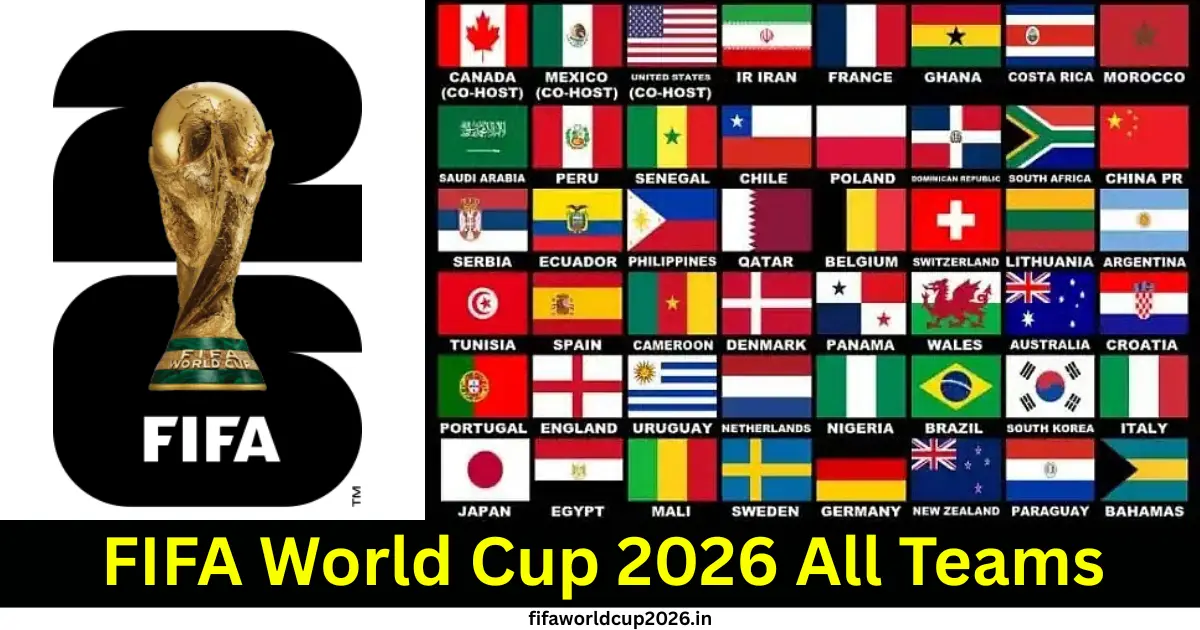
The 48 qualified nations represent six distinct football confederations. Because of the expanded format, several regions have received unprecedented representation.
1. UEFA (Europe) – 16 Slots
Europe remains the largest contingent at the World Cup, sending 16 of its finest teams. Traditional heavyweights dominated the group stages, while the drama concluded with intense play-offs.
Qualified Teams: Austria, Belgium, Bosnia and Herzegovina, Croatia, Czech Republic, England, France, Germany, Netherlands, Norway, Portugal, Scotland, Spain, Sweden, Switzerland, Turkey.
2. CONMEBOL (South America) – 6 Slots
Known as the most grueling qualifiers in world football, South America saw six teams claim automatic qualification spots.
Qualified Teams: Argentina (Reigning Champions), Brazil, Colombia, Ecuador, Paraguay, Uruguay.
3. CAF (Africa) – 9 Slots
Africa was a major beneficiary of the new expansion, nearly doubling its representation from five slots to nine automatic berths.
Qualified Teams: Algeria, Cape Verde, Egypt, Ghana, Ivory Coast, Morocco, Senegal, South Africa, Tunisia.
4. AFC (Asia) – 8 Slots
Asian football showcased incredible growth over a long, highly competitive qualifying cycle, yielding a mix of perennial powerhouses and historic debutants.
Qualified Teams: Australia, Iran, Japan, Jordan, Qatar, Saudi Arabia, South Korea, Uzbekistan.
5. CONCACAF (North, Central America & Caribbean) – 6 Slots
As the host region, CONCACAF will have a massive presence. The three host nations qualified automatically, with three additional teams earning their way through the tournament brackets.
Qualified Teams: Canada (Host), Mexico (Host), United States (Host), Haiti, Panama, and Curaçao.
6. OFC (Oceania) – 1 Slot
History was made in Oceania, as the region received a guaranteed automatic slot for the very first time, eliminating their usual reliance on intercontinental play-offs.
Qualified Team: New Zealand.
Debutants and Historic Milestones
The expansion to 48 teams achieved exactly what FIFA intended: giving rising football nations a chance to shine. The 2026 tournament will feature four debutants making their first-ever World Cup appearances:
Uzbekistan and Jordan earned their historical first berths through a spectacular AFC campaign.
Cape Verde shocked Africa to claim their maiden ticket.
Curaçao completed a fairytale run in the CONCACAF qualifiers, proudly scaling the mountain to become the smallest nation by population to ever qualify for a men’s World Cup.
Additionally, Qatar successfully qualified for the tournament through the competitive grid for the first time, having only ever played in 2022 by virtue of being the hosts. Meanwhile, teams like Norway (powered by Erling Haaland’s lethal qualification scoring run) and Scotland broke long droughts to return to the world stage.
Ready for Kickoff
With 48 teams locked in, the stage is set for a 39-day festival of football consisting of a record-breaking 104 matches. From the formidable giants of Europe and South America to the passionate debutants of Africa and Asia, the 2026 FIFA World Cup promises to be the most inclusive, diverse, and unpredictable tournament the world has ever seen.