The 2026 FIFA World Cup, co-hosted by the United States, Canada, and Mexico, is historic not just for its sprawling North American geography, but for introducing the most radical structural overhaul in modern football history. Abandoning the familiar 32-team system used since 1998, FIFA has expanded the grid to 48 nations.
This change introduces a brand-new match framework, an entirely new knockout round, and altered rules for advancing. This guide outlines how the matches and stages of the 2026 FIFA World Cup will be played.
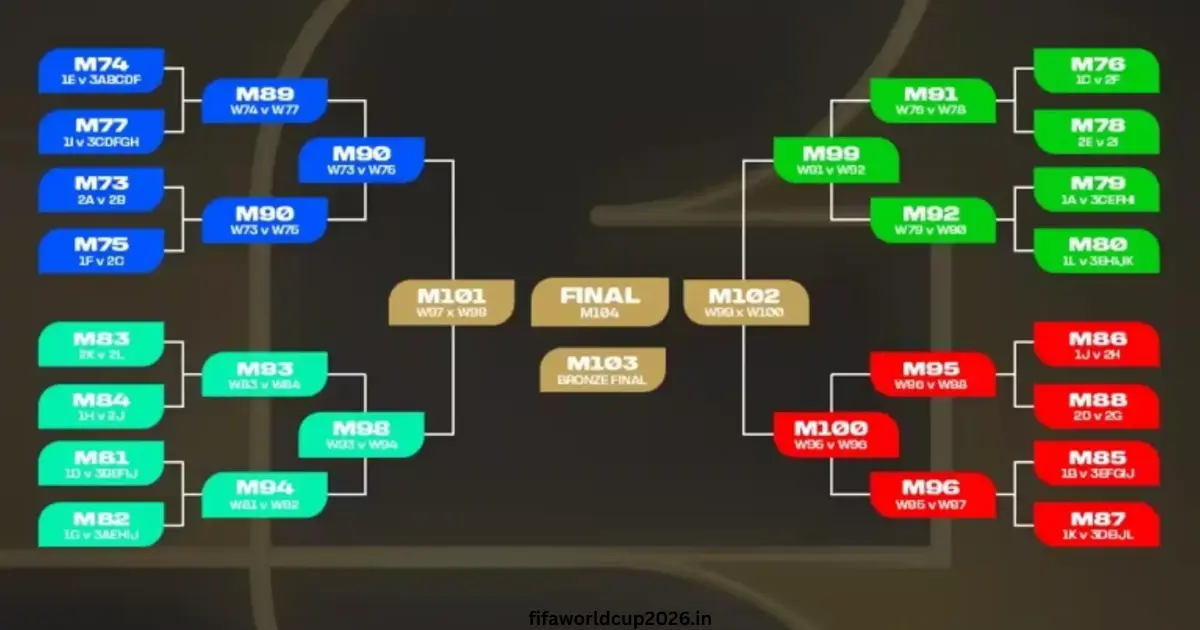
1. The Group Stage: 12 Groups of 4
The opening phase of the tournament structures the 48 qualified teams into 12 groups of four (designated Groups A through L).
The Match Format: Within each group, teams play in a traditional round-robin format. Every nation plays three matches.
The Points System: The standard football scoring matrix applies:
Win: 3 points
Draw: 1 point
Loss: 0 points
Duration: Every group stage match consists of standard 90-minute regulation time (two 45-minute halves) plus stoppage time. Because games can end in draws, there is no extra time or penalty shootouts in the group stage.
2. The Multi-Tiered Qualification Equation
With 12 groups in play, the mathematics of advancing to the next stage required a redesign. A total of 32 teams must emerge from the group stage, filtering through via a two-tiered system:
Automatic Qualifiers: The top two teams with the highest point tallies from all 12 groups automatically advance (24 teams total).
The Wildcard Third-Place Spots: To complete the 32-team bracket, the eight best third-place teams across all 12 groups also advance.
The Tiebreaker Rule: If teams finish level on points, positions are determined by a sequential tiebreaking system: goal difference in all group matches, total goals scored, head-to-head records, and finally, a Fair Play point system based on yellow and red cards accumulated during the three matches.
3. The Knockout Stage: Single-Elimination Drama
Once the field narrows to 32 teams, the tournament transitions into a high-stakes, single-elimination bracket. A brand-new phase, the Round of 32, makes its World Cup debut, extending the knockout journey. The single-elimination pathway flows through six consecutive win-or-go-home rounds:
Round of 32 (New)
Round of 16
Quarterfinals
Semifinals
Third-Place Playoff
The World Cup Final
4. Knockout Match Rules: Solving a Tie
Unlike the group stage, every knockout match must produce a definitive winner on the day. If a match is tied at the end of the standard 90 minutes of regulation, the game proceeds to the following tie-breaking protocols:
Extra Time: Teams will play an additional 30 minutes of extra time, divided into two distinct 15-minute halves. Stoppage time is added to the end of each extra-time half.
Penalty Shootout: If the score remains tied at the conclusion of all 120 minutes of play, the winner is decided by a standard five-round penalty shootout. Teams alternate kicks; if the score remains tied after five rounds, the shootout enters a sudden-death phase until a winner emerges.
Substitution Rule: Teams are permitted five standard substitutions per match, with an additional sixth substitution granted if a match moves into extra time.
The Ultimate Path to Glory
Because of the addition of the Round of 32, the total match count of the tournament climbs from 64 to 104 matches. For the players on the pitch, the expansion alters physical demands: the two nations that successfully reach the World Cup Final will have played eight total matches over the course of the tournament, rather than the traditional seven.