France World Cup 2026 Squad: Tactical Analysis of Didier Deschamps’ 26-Man Roster
As the international footballing landscape shifts toward North America for the 2026 FIFA World Cup, all eyes are squarely fixed on France. Les Bleus enter the competition not merely as participants, but as the benchmark of modern international football. Having secured the trophy in 2018 and narrowly missing out on a consecutive title in a historic 2022 final, manager Didier Deschamps is preparing for his final tournament at the helm.
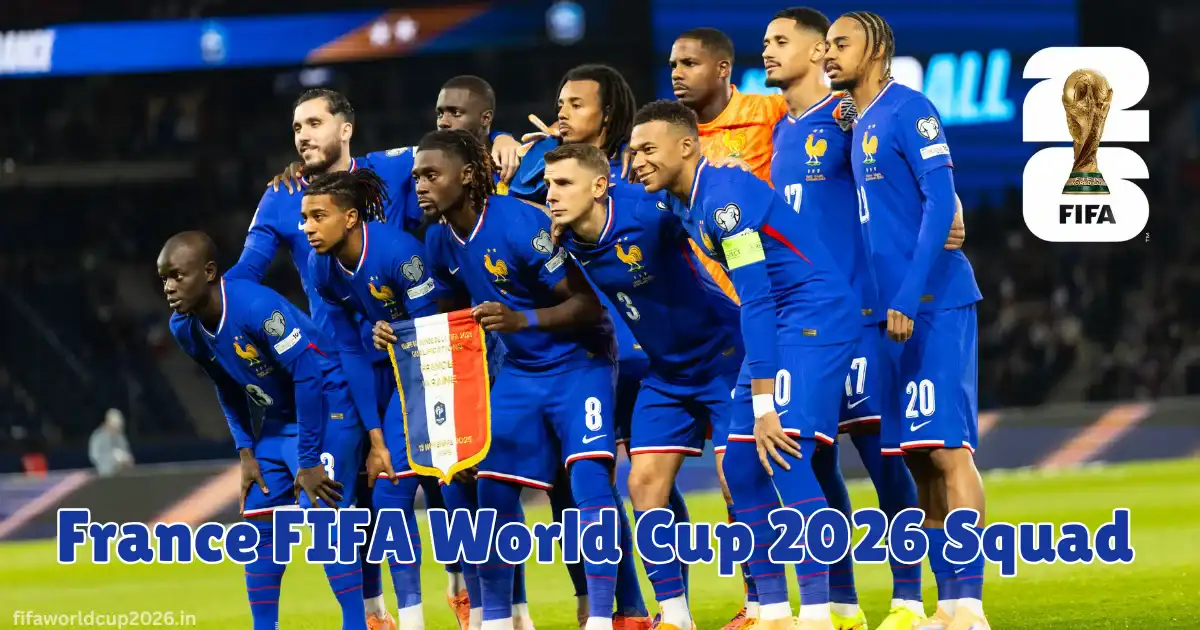
Deschamps’ newly announced 26-man squad reflects a deliberate fusion of seasoned championship winners and a devastatingly talented wave of new-generation players. The selection process highlights France’s frightening player pool depth, prompting heavy selection headaches and the controversial omission of household names.
The Big Absentees: Ruthless Selection Decisions
In France, elite individual talent is rarely enough to guarantee a spot on the plane. The most shocking headline from Deschamps’ roster announcement is the exclusion of Real Madrid’s versatile midfielder Eduardo Camavinga. Enduring a season of fluctuating playing time and nagging injuries, Camavinga was ultimately left out in favor of tactical profiles more suited to Deschamps’ balanced system.
Similarly, Randal Kolo Muani a focal point of the 2022 attack missed the cut following a quiet domestic campaign. With Liverpool’s Hugo Ekitike sidelined due to an Achilles injury sustained late in the club season, Deschamps recalibrated his offensive philosophy, favoring red-hot form and specialized attacking skill sets over historical sentiment.
Don’t miss
Goalkeepers: Security in the Post-Lloris Era
Between the sticks, France remains in incredibly safe hands. AC Milan’s Mike Maignan enters the tournament firmly established as the undisputed number one. Renowned for his exceptional shot-stopping, spatial awareness, and progressive distribution, Maignan provides the backline with an assertive vocal leader.
The backup positions feature Stade Rennais’ dependable Brice Samba and the highly anticipated inclusion of Lens’ young prodigy Robin Risser, who earned his spot ahead of Lille’s Lucas Chevalier after a sensational domestic breakthrough.
Defenders: A Blueprint of Physicality and Flexibility
France’s defensive depth is arguably the most formidable in the tournament. The center-back selection creates a fascinating three-way battle for two starting positions among Arsenal’s William Saliba, Liverpool’s Ibrahima Konaté, and Bayern Munich’s Dayot Upamecano. Saliba’s world-class composure and elite recovery pace make him a projected starter, likely paired with the aggressive, front-footed Upamecano. Crystal Palace’s Maxence Lacroix rounds out the central options following his impressive international debut earlier this year.
At full-back, Deschamps has prioritized elite coverage:
Right-Back: Jules Koundé brings positional discipline and elite 1v1 defensive traits, while Chelsea’s Malo Gusto offers an explosive, overlapping alternative.
Left-Back: Theo Hernández provides unstoppable attacking width and transitional speed, balanced by the defensive reliability of his brother Lucas Hernández (PSG) and Aston Villa’s Lucas Digne.
Midfield: The Engine Room
The French midfield blends relentless defensive tracking with generational youth profiles. Real Madrid’s Aurélien Tchouaméni serves as the tactical anchor, responsible for breaking up opposition counters and recycling possession. Alongside him, Adrien Rabiot enjoying a stellar campaign with AC Milan offers box-to-box energy, tactile intelligence, and physical presence in the aerial duels.
The sentimental yet entirely merited inclusion of veteran N’Golo Kanté gives Deschamps an elite defensive closer off the bench. Meanwhile, PSG’s teenage phenom Warren Zaïre-Emery and AS Roma’s Manu Koné infuse the squad with dynamic ball-carrying capabilities and high-volume pressing metrics required to dominate modern possession-based structures.
Attackers: Unmatched Firepower
Up front, France possesses an attacking arsenal that is the envy of world football. Captain Kylian Mbappé leads the frontline, looking to cement his legacy among the World Cup’s all-time top scorers. He is flanked by Paris Saint-Germain’s Ousmane Dembélé, who enters the tournament in Ballon d’Or-contending form, providing unparalleled dribbling fluidity on the opposite flank.
Adding depth to this devastating front line:
Michael Olise: The Bayern Munich winger offers precise playmaker qualities, set-piece delivery, and inside-cutting threat.
Bradley Barcola & Désiré Doué: The PSG duo injects unpredictability, verticality, and raw athletic pace into late-game scenarios.
Rayan Cherki & Maghnes Akliouche: Operating between the lines, these creative technicians offer specialized low-block breaking capability.
The Traditionalists: Marcus Thuram and Crystal Palace’s Jean-Philippe Mateta provide essential aerial presence and physical hold-up play, reminiscent of the crucial tactical role Olivier Giroud played during the 2018 championship run.
France 26 Players Team Squad for FIFA World Cup
| Player | Position | Club |
| Mike Maignan | Goalkeeper | AC Milan |
| Brice Samba | Goalkeeper | Rennes |
| Robin Risser | Goalkeeper | RC Lens |
| William Saliba | Defender | Arsenal |
| Dayot Upamecano | Defender | Bayern Munich |
| Ibrahima Konaté | Defender | Liverpool |
| Jules Koundé | Defender | Barcelona |
| Malo Gusto | Defender | Chelsea |
| Maxence Lacroix | Defender | Crystal Palace |
| Theo Hernández | Defender | Al-Hilal |
| Lucas Hernández | Defender | Paris Saint-Germain |
| Lucas Digne | Defender | Aston Villa |
| Aurélien Tchouaméni | Midfielder / Defensive Midfielder | Real Madrid |
| Adrien Rabiot | Midfielder | AC Milan |
| Warren Zaïre-Emery | Midfielder | Paris Saint-Germain |
| Manu Koné | Midfielder | AS Roma |
| N’Golo Kanté | Midfielder | Fenerbahçe |
| Kylian Mbappé | Forward / Winger | Real Madrid |
| Ousmane Dembélé | Forward / Winger | Paris Saint-Germain |
| Michael Olise | Forward / Winger | Bayern Munich |
| Désiré Doué | Forward / Winger | Paris Saint-Germain |
| Bradley Barcola | Forward / Winger | Paris Saint-Germain |
| Rayan Cherki | Forward / Attacking Midfielder | Manchester City |
| Maghnes Akliouche | Forward / Attacking Midfielder | Monaco |
| Marcus Thuram | Forward / Striker | Inter Milan |
| Jean-Philippe Mateta | Forward / Striker | Crystal Palace |
You may also like
Tactical Outlook: The Projected Starting XI
Deschamps is expected to deploy a fluid 4-2-3-1 formation that seamlessly transitions into a 4-3-3 out of possession, ensuring defensive stability while allowing his creative players total freedom in the final third.
▲ Target Man / Fluid Forward: Dembélé
◀ Left Wing: Mbappé (C)           ▶ Right Wing: Olise
            ★ Playmaker: Cherki
     ▼ Central Midfield: Rabiot, Tchouaméni
◀ Left Back: T. Hernández         ▶ Right Back: Koundé
     ■ Center Backs: Saliba, Upamecano
            ● Goalkeeper: Maignan
By deploying Dembélé as a dynamic central presence or utilizing Mbappé’s lethal inside-cutting runs from the left, France can bypass rigid defensive structures. The double-pivot of Tchouaméni and Rabiot secures the center lane, letting full-backs like Theo Hernández fly forward to overload the flanks.
Final Thoughts
Didier Deschamps has built a balanced, fiercely competitive roster devoid of complacency. By omitting underperforming stars and integrating elite young profiles, Les Bleus head into the tournament as the definitive team to beat. If Mbappé maintains his standard tournament output and the Saliba-led defense holds firm, France has every ingredient necessary to reach a third consecutive World Cup final.