Samurai Blue’s Calculated Gamble: Analyzing Japan’s FIFA World Cup 2026 Roster
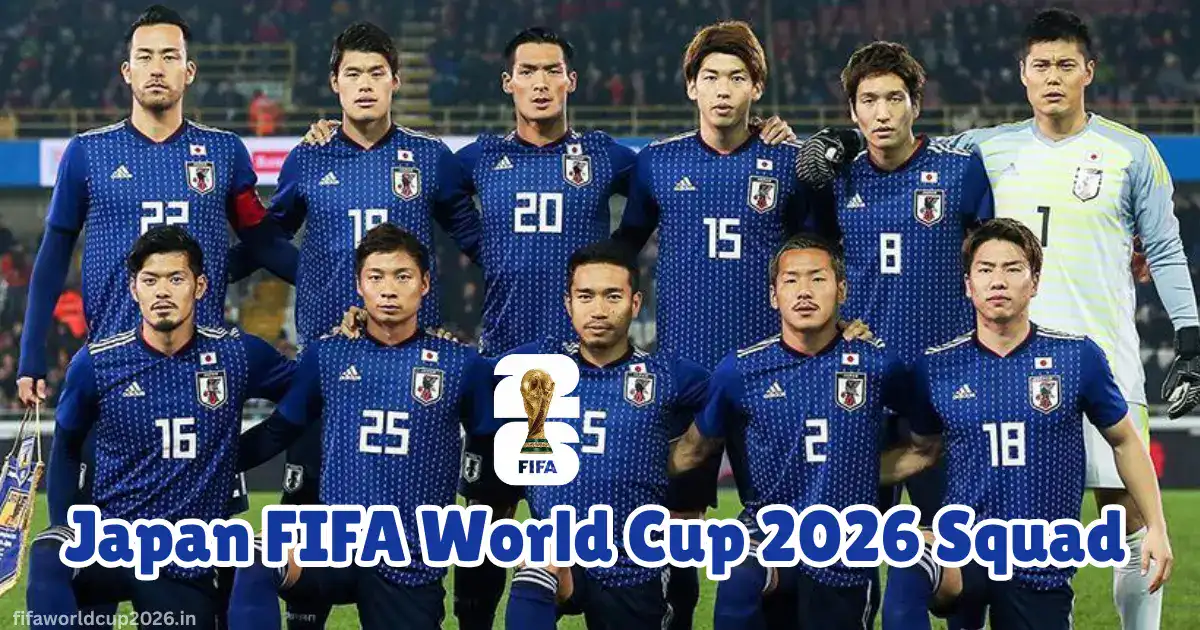
As the 2026 Football World Cup approaches, the Japan Football Association (JFA) has officially unveiled head coach Hajime Moriyasu’s 26-man roster. Japan was the first non-host nation to punch its ticket to North America, steamrolling through Asian qualifying with tactical dominance. Yet, the final selection process was far from straightforward. Faced with unexpected injuries to foundational pieces, Moriyasu has assembled a fascinating blend of battle-tested veterans, dynamic European mainstays, and highly rated teenage prospects.
The clear objective? Break the “Round of 16 curse” and reach the quarterfinals for the first time in Japan’s history.
The Headline Heartbreak: Mitoma Misses Out
The most jarring news from Tokyo was the omission of Brighton & Hove Albion’s explosive winger, Kaoru Mitoma. Having torn his hamstring just a week prior to the squad announcement, Mitoma’s recovery timeline failed to align with the tournament. Visible tears welled in Moriyasu’s eyes during the televised press conference as he confirmed the news.
“It’s a huge blow to us, and his injury is just sad,” Moriyasu admitted. “But what he’s done has helped us improve to where we are now. We win as a team.”
Compounding Mitoma’s absence is the loss of Monaco’s Takumi Minamino, who failed to recover from an ACL tear, and Sporting CP’s midfield engine, Hidemasa Morita. These absences strip Japan of some of the elite, vertical isolation play that famously unseated Spain and Germany four years ago in Qatar.
You may also like
The Historic Five: Nagatomo Leads the Backline
To compensate for a depleted attack, Moriyasu has loaded his defense with high-level experience and physical robustness.
The headline story is 39-year-old Yuto Nagatomo (FC Tokyo). His inclusion marks his fifth consecutive World Cup call-up, making him the first Asian footballer in history to achieve the feat. While Nagatomo functions primarily as a dressing-room anchor, Japan’s actual defensive success rests on a highly sophisticated crop of European-based center-backs and fullbacks.
| Player | Club | Key Attribute |
| Takehiro Tomiyasu | Ajax (NED) | Positional versatility, elite 1v1 defending |
| Ko Itakura | Ajax (NED) | Aerial dominance, distribution out of the back |
| Hiroki Ito | Bayern Munich (GER) | Structural flexibility (can shift seamlessly to left-back) |
| Yukinari Sugawara | Werder Bremen (GER) | Overlapping runs and elite crossing accuracy |
Crucially, both Tomiyasu and Itakura have overcome major injury clouds just in time to solidify the spine of the defense. Backed by Parma’s rising goalkeeper Zion Suzuki, Japan boasts arguably the most structurally disciplined defensive unit in the Asian Football Confederation (AFC).
A Midfield Balanced by Premier League Steel
With Morita out, the burden of controlling tempo falls squarely onto the shoulders of captain Wataru Endo. The Liverpool midfielder provides the defensive screen, ball progression, and tactical communication required to protect the back four.
Partnering with Endo in the engine room is Leeds United’s Ao Tanaka, a player with an innate knack for making late, goal-scoring runs into the penalty area. Ahead of them, Crystal Palace’s Daichi Kamada will handle creative orchestration, operating in the half-spaces to feed Japan’s rapid wide players.
The Next Generation: Kubo and the New Attack
Without Mitoma’s blistering pace on the left flank, Japan’s tactical identity shifts toward technical possession, intricate interplay, and elite transitional pressing. Real Sociedad’s Takefusa Kubo is now tasked with becoming the team’s undisputed creative focal point.
Kubo’s ability to unlock low blocks from the right wing will be mirrored on the left by Stade de Reims’ Keito Nakamura, who enters the tournament in sharp goal-scoring form. Eintracht Frankfurt’s Ritsu Doan, a proven big-game hunter, adds further elite depth across the front line.
Up front, Feyenoord’s Ayase Ueda is expected to lead the line as the starting number nine. He is complemented perfectly by NEC Nijmegen’s clinical Koki Ogawa and Celtic’s hyper-athletic Daizen Maeda, whose tireless defensive pressing acts as Japan’s first line of defense.
See also
Moriyasu’s Youth Wildcards
In a surprising developmental twist, Moriyasu has used his final roster spots on two highly explosive teenagers:
Keisuke Goto (20, Sint-Truidense) – A towering 191 cm physical target man.
Kento Shiogai (21, VfL Wolfsburg) – A relentless, direct forward built for modern European pressing.
While unlikely to start, their contrasting profiles give Japan a chaotic plan B off the bench that they notably lacked in previous tournaments.
Japan 2026 FIFA World Cup Players Roster
| Player | Position | Club | League (Country) |
| Zion Suzuki | Goalkeeper | Parma Calcio 1913 | Serie A (ITA) |
| Keisuke Osako | Goalkeeper | Sanfrecce Hiroshima | J1 League (JPN) |
| Tomoki Hayakawa | Goalkeeper | Kashima Antlers | J1 League (JPN) |
| Yuto Nagatomo | Defender | FC Tokyo | J1 League (JPN) |
| Shogo Taniguchi | Defender | Sint-Truidense VV | Pro League (BEL) |
| Ko Itakura | Defender | AFC Ajax | Eredivisie (NED) |
| Takehiro Tomiyasu | Defender | AFC Ajax | Eredivisie (NED) |
| Hiroki Ito | Defender | Bayern Munich | Bundesliga (GER) |
| Tsuyoshi Watanabe | Defender | Feyenoord | Eredivisie (NED) |
| Ayumu Seko | Defender | Le Havre AC | Ligue 1 (FRA) |
| Yukinari Sugawara | Defender | SV Werder Bremen | Bundesliga (GER) |
| Junnosuke Suzuki | Defender | F.C. Copenhagen | Superliga (DEN) |
| Wataru Endo | Midfielder | Liverpool FC | Premier League (ENG) |
| Daichi Kamada | Midfielder | Crystal Palace FC | Premier League (ENG) |
| Ao Tanaka | Midfielder | Leeds United FC | Championship (ENG) |
| Kaishu Sano | Midfielder | 1. FSV Mainz 05 | Bundesliga (GER) |
| Yuito Suzuki | Midfielder | SC Freiburg | Bundesliga (GER) |
| Junya Ito | Midfielder / Forward | KRC Genk | Pro League (BEL) |
| Ritsu Doan | Midfielder / Forward | Eintracht Frankfurt | Bundesliga (GER) |
| Keito Nakamura | Midfielder / Forward | Stade de Reims | Ligue 1 (FRA) |
| Takefusa Kubo | Midfielder / Forward | Real Sociedad | La Liga (ESP) |
| Daizen Maeda | Forward | Celtic FC | Premiership (SCO) |
| Ayase Ueda | Forward | Feyenoord | Eredivisie (NED) |
| Koki Ogawa | Forward | NEC Nijmegen | Eredivisie (NED) |
| Keisuke Goto | Forward | Sint-Truidense VV | Pro League (BEL) |
| Kento Shiogai | Forward | VfL Wolfsburg | Bundesliga (GER) |
Don’t miss
The Road Ahead: Group F Strategy
Japan finds themselves dropped into Group F, a tightly contested pool featuring the Netherlands, Sweden, and Tunisia.
The Samurai Blue open their campaign on June 14 against the Dutch in Dallas, Texas. It is a grueling opener, but recent friendly triumphs including a historic victory over England at Wembley Stadium and a win against Brazil have filled this squad with belief.
Moriyasu’s blueprint relies on a highly flexible 4-2-3-1 that can instantly morph into a compact 5-4-1 mid-block when out of possession. Even without their brightest individual superstar in Mitoma, Japan’s relentless collective work rate, tactical maturity, and elite squad depth make them a terrifying assignment for any heavyweight in North America.-